
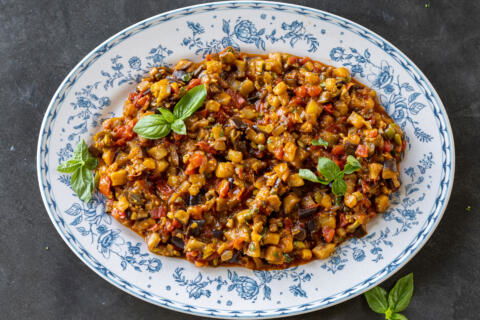
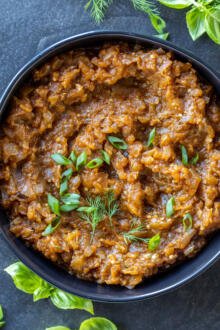
This eggplant caponata is a tangy, mouthwatering blend of sautéed veggies and Sicilian ingredients. The first bite will transport you across the world!
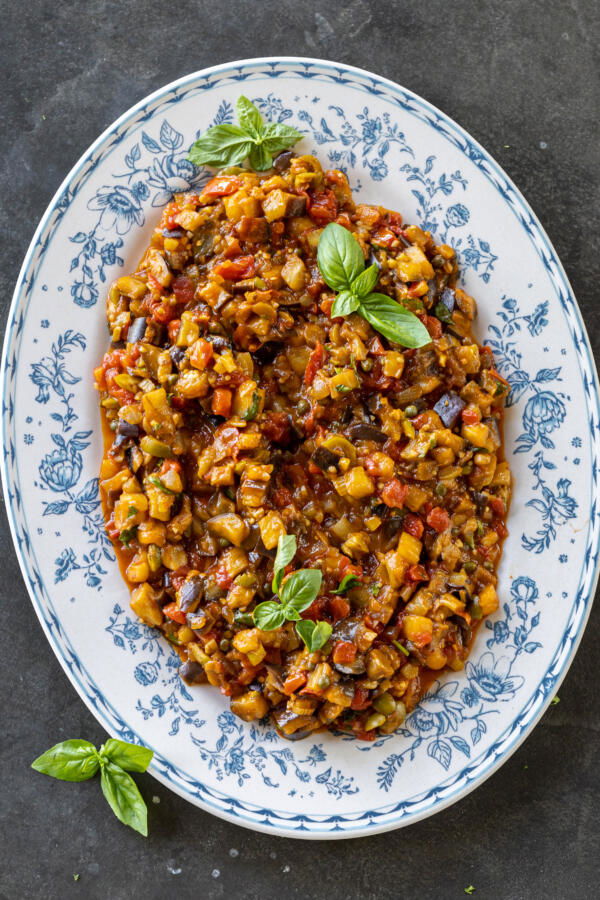
During my travels to Italy, I was blown away by the amount of fresh vegetable dishes. Most people think Italian cuisine is mainly pizza and pasta, but I was amazed by how much Italians love their veggies, too. On one of my recent trips, eggplant caponata stole my heart. The one I tasted was wonderfully refreshing and light, yet it packed such a delicious flavor punch. It reminded me of the eggplant caviar I grew up eating in Ukraine — different ingredients, same delicious idea! So, like many of my recipes, I set out on a journey to make my very own easy caponata recipe.
What Is Eggplant Caponata?
Caponata is a traditional Sicilian sweet-and-sour relish starring eggplant, tomatoes, olives, and capers. Its signature agrodolce (sweet and sour) flavor comes from vinegar and sugar or raisins. Unlike French ratatouille, caponata uses briny ingredients and is served at room temperature as an appetizer or side.
Did you know: It’s believed that this dish originated in Sicily’s Jewish community, as cooks would preserve salads ahead of time with vinegar and sugar in preparation for Shabbat, or the “day of rest.”
Eggplant Caponata Video
How To Make Eggplant Caponata
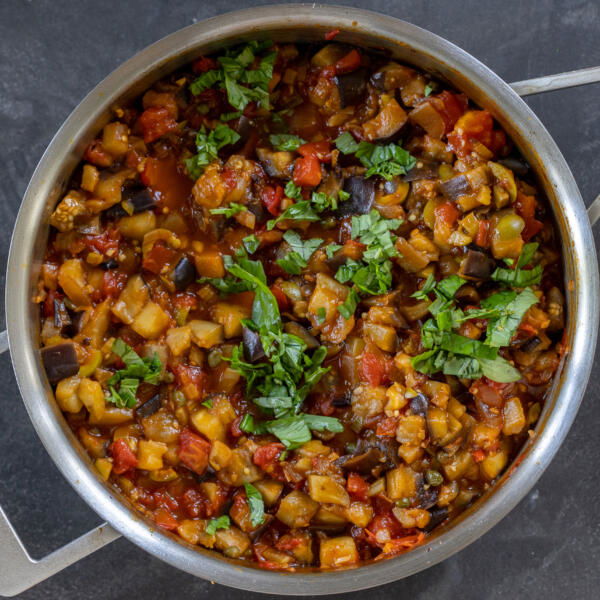
A two‑pan approach builds deep flavor without fuss. Sauté or roast the eggplant, cook down the aromatic base, then combine everything into a glossy, thick sauce. Here’s the game plan for this easy caponata recipe.
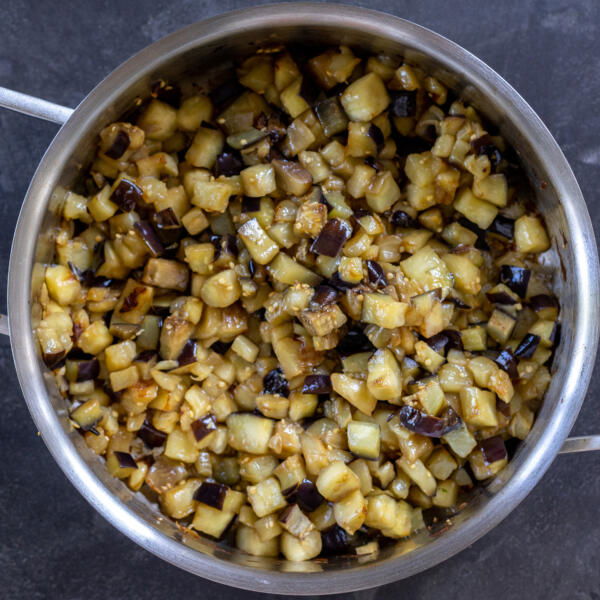
- Sauté the eggplant: In a large oiled skillet over medium-high heat, sauté the diced eggplant for 10-15 minutes until it’s golden brown. Transfer it to a separate plate.
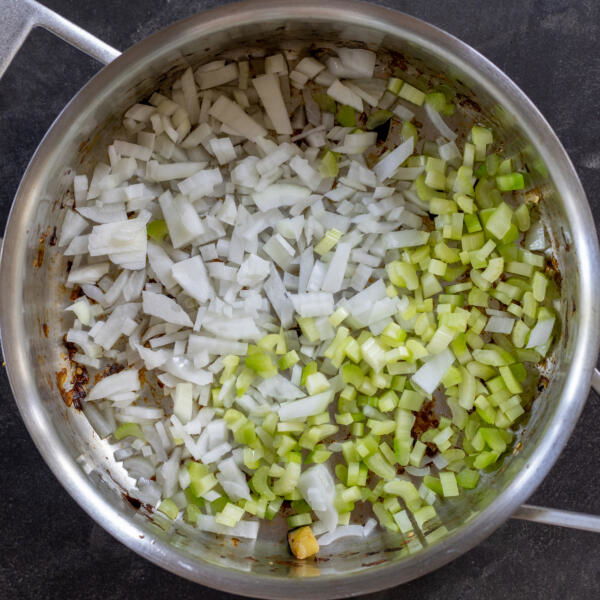
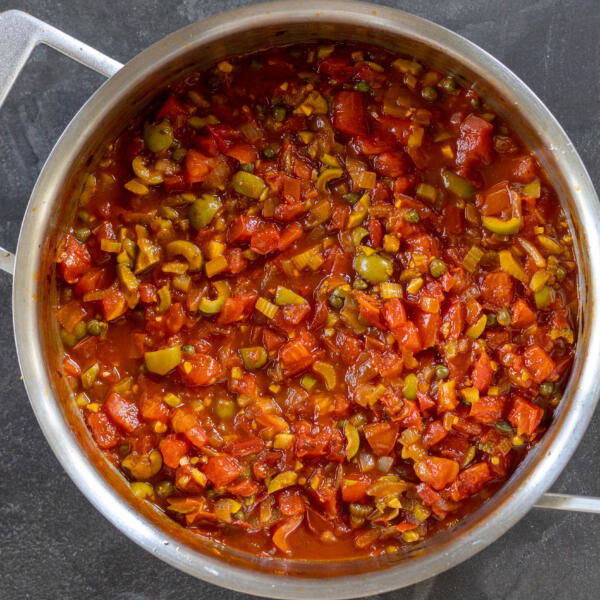
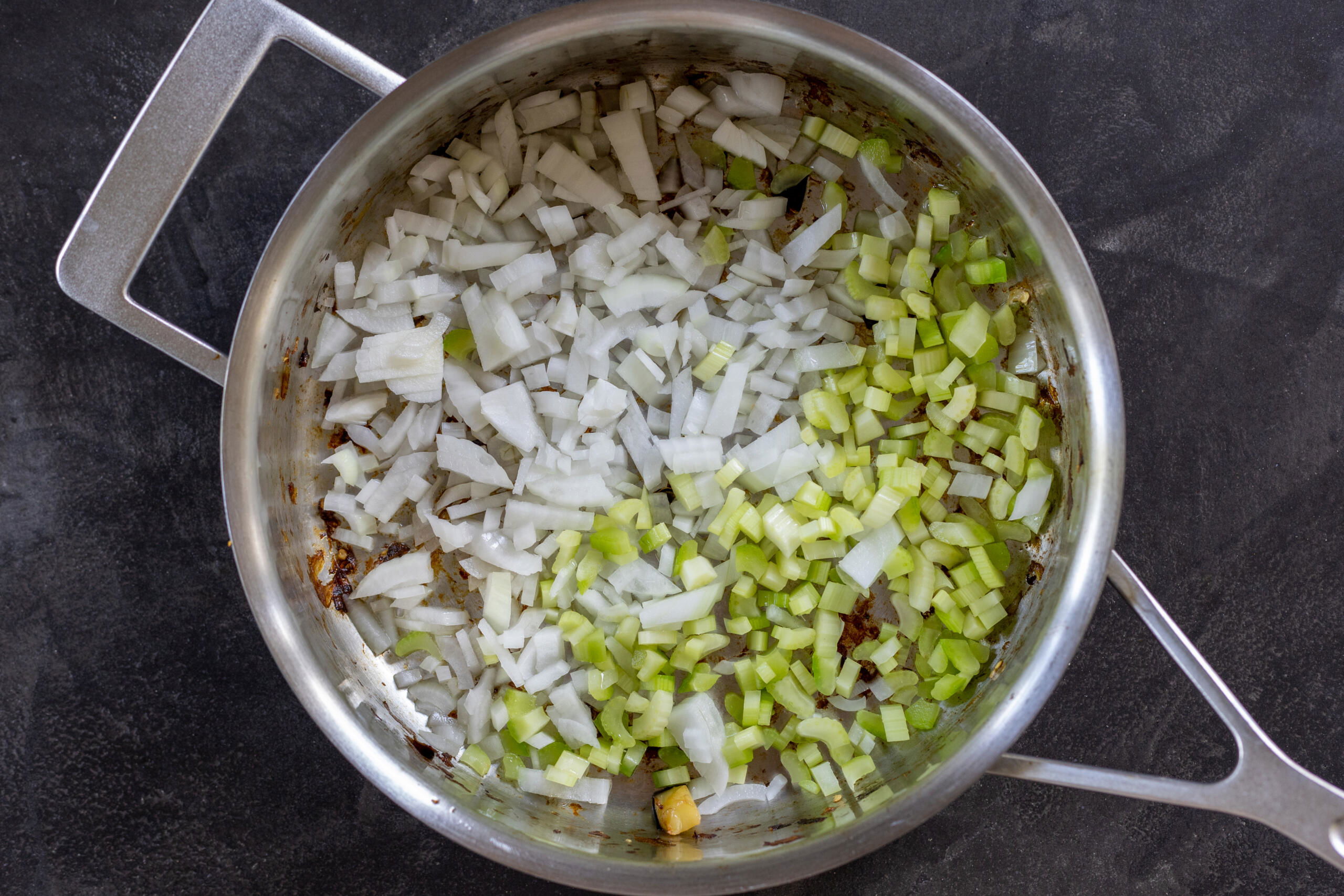
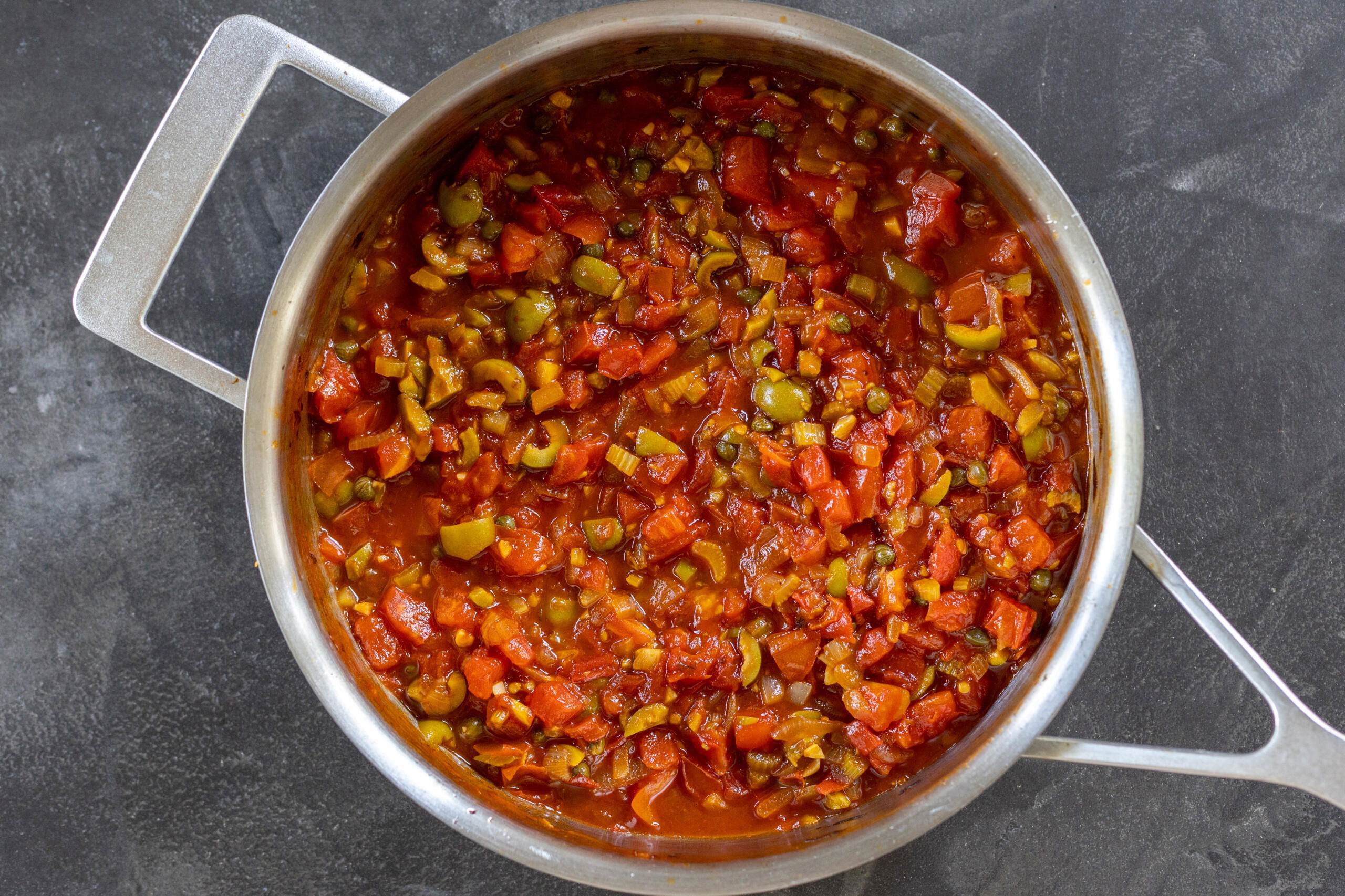
- Build the sauce: In the same pan, soften the onions and celery, then add the garlic. Stir in the tomatoes, olives, capers, tomato paste, sugar, and red wine vinegar. Season to taste with salt. Simmer for 10-15 minutes until the sauce thickens and the tomatoes break down.
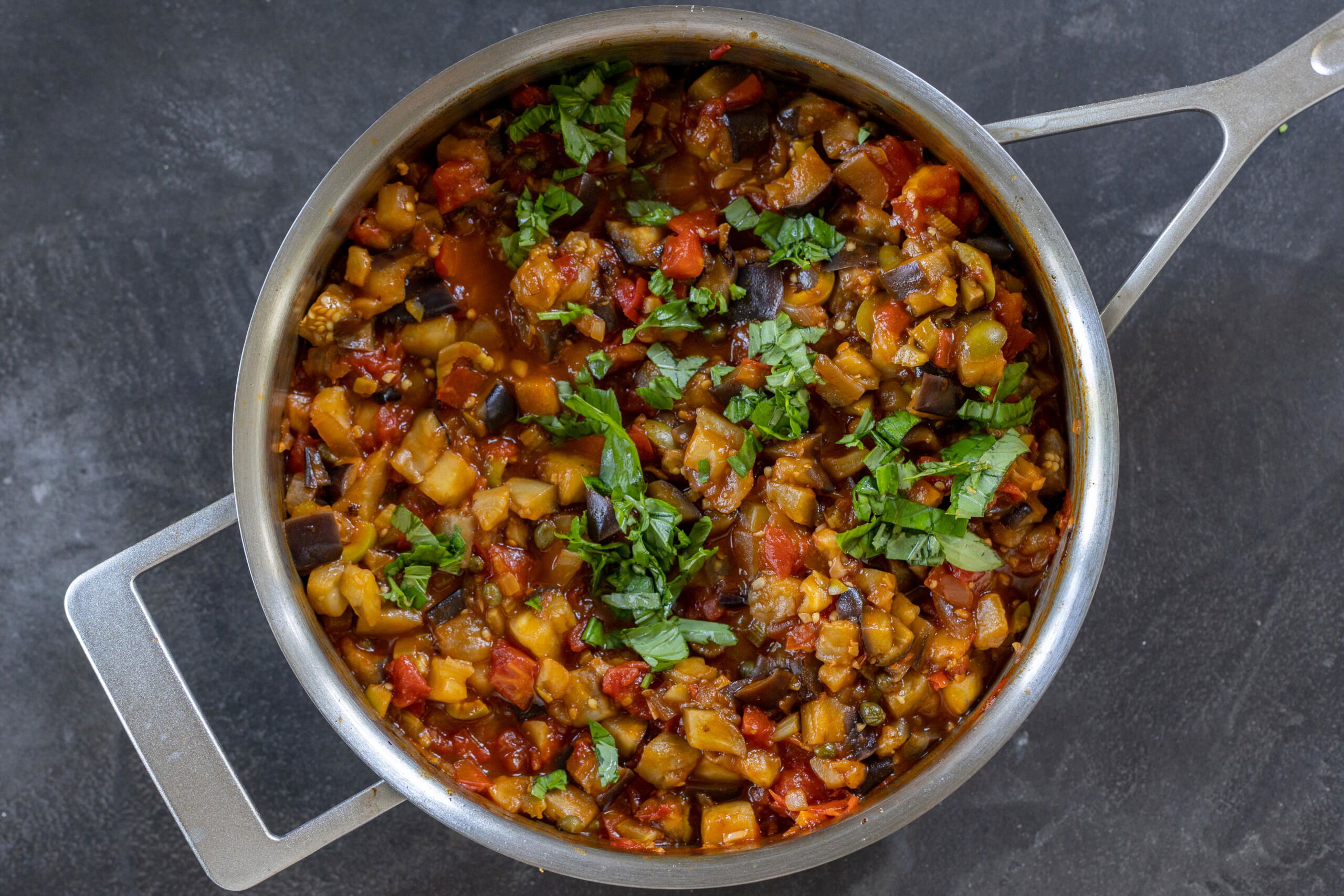
- Combine and finish: Fold the eggplant back into the sauce and cook a few more minutes. Let the caponata sit — the longer it rests, the better it tastes. Scatter fresh basil right before serving.
Hot tip: If you prefer using the oven, follow this recipe for oven-roasted eggplant instead of sautéeing it.
Recipe Variations & Substitutions
Tweak the formula with these yummy swaps. Every family has its own version, and I’m a firm believer that yours can be different than mine!
- Vegetables: I use fresh tomatoes, but you can also use canned crushed tomatoes (fire roasted if you want smoky flavor). You can also add diced red bell peppers, zucchini, potatoes, carrots, or any other veggies.
- Olives and capers: Choose buttery Castelvetrano olives, briny Kalamata, or any pitted variety. It’s also best to rinse the salty capers as they can make the dish overly salty!
- Raisins: Golden raisins or dried currants give the classic sweet note. Try soaking them in a splash of vinegar to plump them up before adding them in. If you desire, replace the sugar with one tablespoon of honey.
- Tomato paste: This may not be the classic way of doing things, but the tomato paste may be substituted by ketchup in a pinch.
- Vinegar choices: Red wine vinegar is traditional, but white wine, sherry, or balsamic vinegar work. Balsamic darkens the color and adds a deeper sweetness.
- Herb finish: Basil, fresh parsley, or mint each bring a fresh lift. A pinch of crushed red pepper flakes adds heat.
- Nuts: Toast some pine nuts or almonds and sprinkle them on top for some crunch.
- Protein boost: Stir in canned chickpeas for a heartier dish, or fold in flaked tuna or swordfish for a coastal Sicilian twist.
Tips From the Kitchen
It took me a few tries to get this eggplant caponata recipe to taste just like the one I tried in Italy. Over my attempts, I made a list of tips that helped me nail the final version, so here they are!
- Peel and salt the eggplant (optional): Salting the eggplant draws out bitterness and moisture. Use fine salt, let it drain in a colander set over a bowl for at least 30 minutes, rinse, then dry thoroughly.
- Season the agrodolce to taste: Start with the recipe’s sugar, salt, and vinegar amounts. Then taste — more sugar for sweetness, more vinegar for tang. Olives and capers bring salt, so add any extra salt with caution. I always say to season to taste!
- Rest overnight: Flavors fuse and deepen. Make it a day ahead, refrigerate, and bring to room temperature before serving. Add fresh herbs only when ready to eat.
- Use a good oil: A quality extra‑virgin olive oil really does elevate the dish.
Tip from the kitchen: For perfectly tender eggplant, cut uniform cubes and do not overload the pan. Keep the skin on small Italian eggplants, but peel if you have a large eggplant.
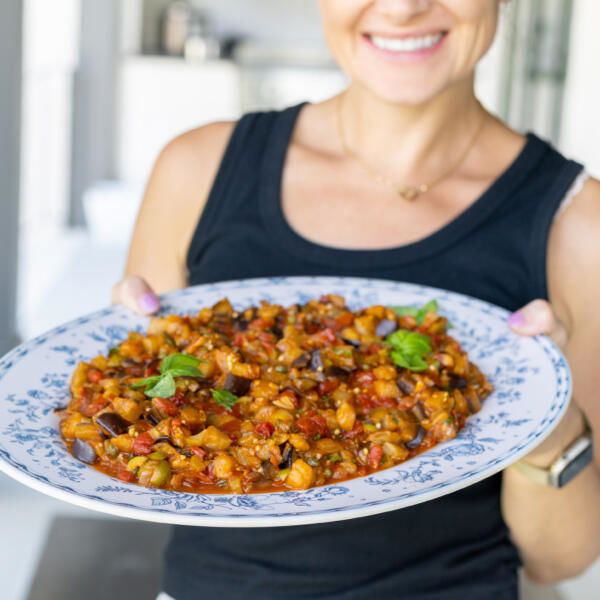
How to Serve Sicilian Caponata
Caponata shines at room temperature, but warm or chilled versions work too. Serve it any of these ways:
- As an appetizer: Pile the caponata on toasted crostini or crusty bread. Garnish with extra basil and a drizzle of olive oil.
- With a protein: Serve as a relish alongside grilled chicken, fish, steak, or lamb. The tang cuts through richness beautifully.
- With pasta: Toss with hot pasta for a quick, satisfying meal. A sprinkle of Parmesan adds umami (skip if vegan).
- As a topping: Spoon over scrambled eggs or an omelet for a brunch‑worthy upgrade.
- On pizza: Use as a base on pizza or flatbread before baking — it’s a Sicilian‑inspired game changer.
- In a sandwich: Spread inside a panini or wrap for a punchy filling.
Storage & Reheating
The dish is a meal‑prepper’s dream — make it once, enjoy it all week!
- Refrigerator: Store caponata in an airtight container (here’s my favorite storage set!) for up to five days in the fridge. Remember, the taste improves dramatically after 24 hours!
- Freezer: It is best not to freeze caponata as the texture changes and the veggies become mushy.
- Reheating: Caponata is traditionally served at room temperature, but a gentle warm‑up on the stovetop or microwave works if you prefer it warm.
Make ahead tip: Prepare the caponata 1-2 days early. Keep it chilled, then let it sit at room temperature for about an hour before serving. Add fresh herbs only after that rest.
More Eggplant Recipes
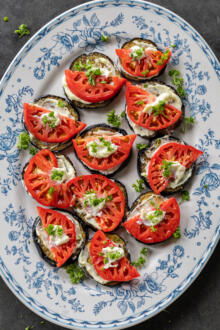
- Eggplant Roll‑Up Appetizers — Stuffed with creamy sautéed veggies
- Eggplant Salad (Melitzanosalata) — You’ll love the fresh Mediterranean flavors!
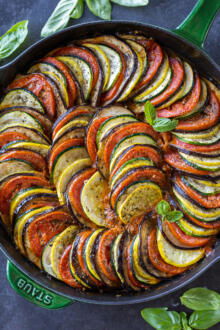
- Ratatouille — A French classic with eggplant, tomatoes and squash
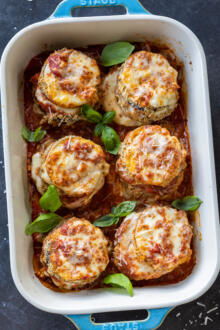
- Stuffed Eggplant — Stuffed with beef and cheese, this is a flavorful lower‑carb dinner
Recipe
Ingredients
- 4 tbsp oil olive or avocado, divided
- 2 large eggplants (about 4 cups) diced into 1/2 inch pieces
- 1 medium onion finely chopped
- 1/2 cup celery finely diced
- 3 garlic cloves minced
- 2 large tomatoes (about 2 cups) diced
- 1/2 cup pitted green olives roughly chopped
- 3 tbsp capers
- 1/4 cup tomato paste
- 2 tbsp granulated sugar
- 3 tbsp red wine vinegar
- 1 tsp salt adjust to preference
- 1/4 cup fresh basil chopped
Instructions
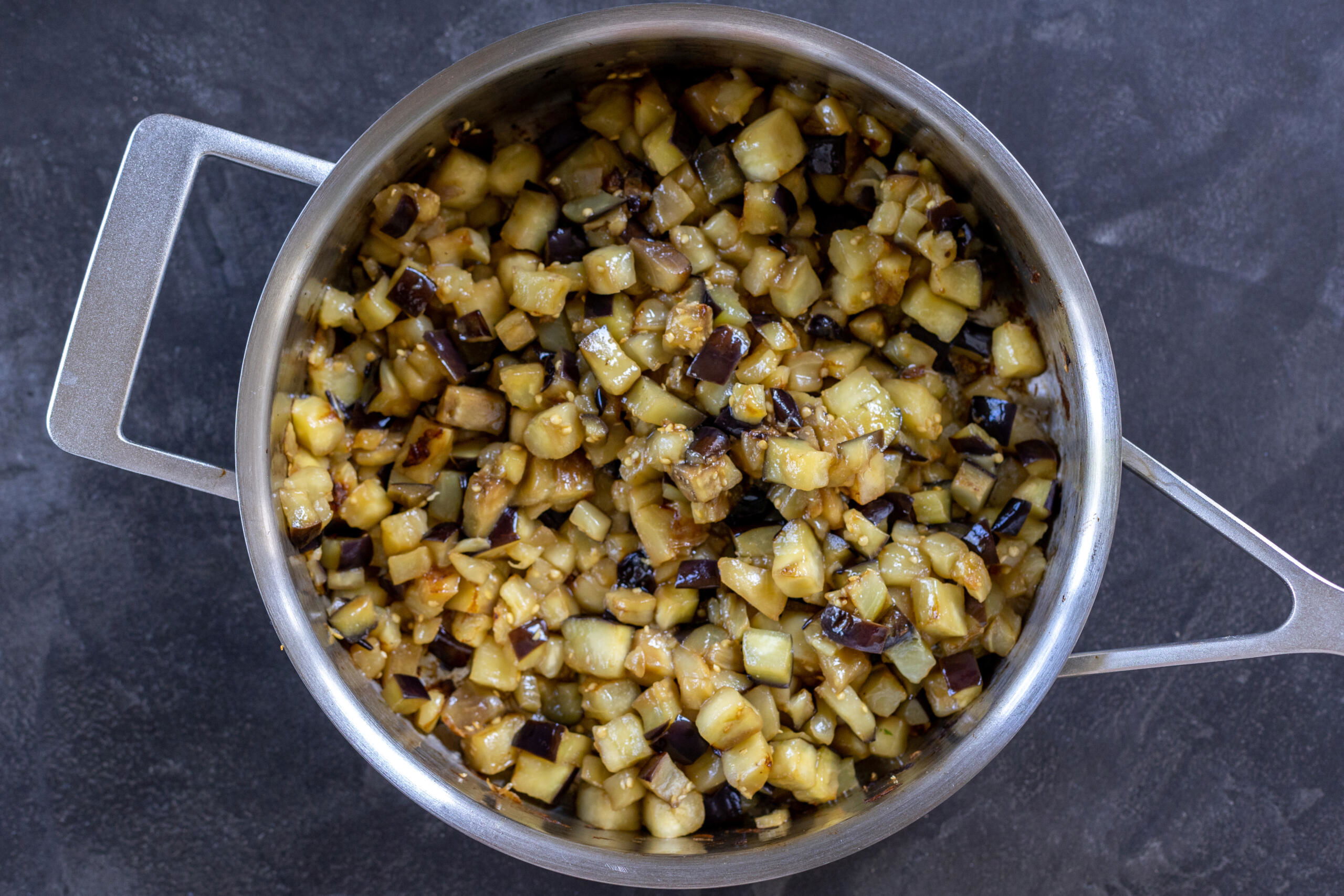
- In a large skillet over medium-high heat, heat 3 tbsp of oil. Add the diced eggplant and sauté until it is cooked through and golden brown, about 10-15 minutes. Transfer the eggplant to a clean plate.
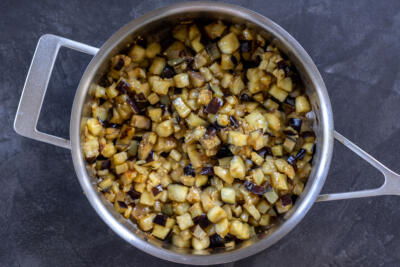
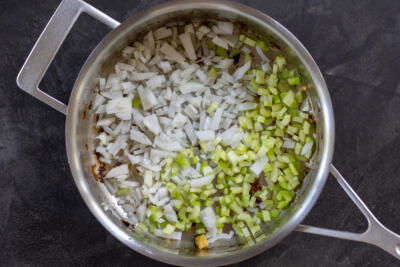
- In the same skillet, heat the remaining 1 tbsp oil over medium heat. Add the chopped onions and celery, and cook until they are softened, about 8-10 minutes. Add the garlic and cook for another minute.
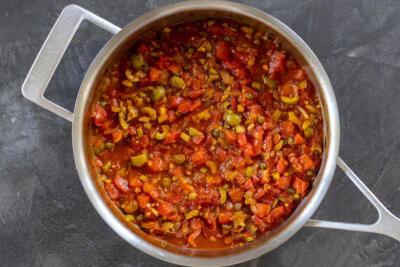
- Stir in the tomatoes, olives, capers, tomato paste, sugar, and red wine vinegar. Season the mixture to taste with salt and simmer for about 10-15 minutes, or until the tomatoes have softened and the sauce has thickened.
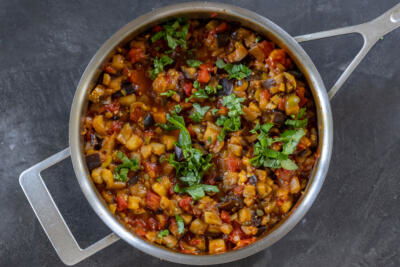
- Add the cooked eggplant back in. Toss everything together and cook for another few minutes, just until it's all incorporated. For the best taste, refrigerate and rest overnight. When ready to serve, sprinkle with the fresh basil and enjoy!
Sounds delish! Do you peel the eggplant? I never know for sure when I see a recipe with them in it.
Thanks for what you do!!
Hey Gail, I don't peel them for this recipe, but you can if you wanted to. They cook down a lot so the skin isn't bitter or tough so I don't think it's necessary. Let me know once you try it!