
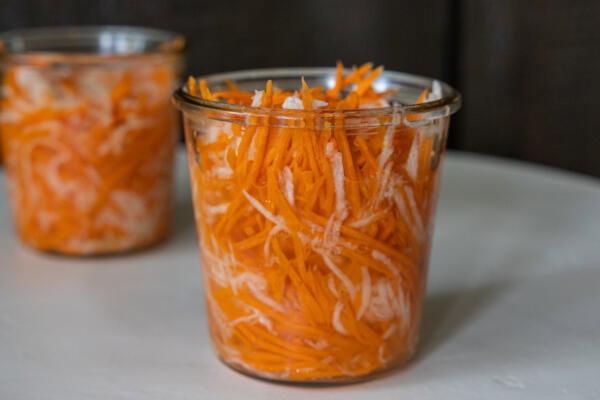
Pickled daikon radish and carrots add the perfectly vibrant, tangy crunch to banh mi, bowls, and salads. I love the taste and how easy it is to make this side!
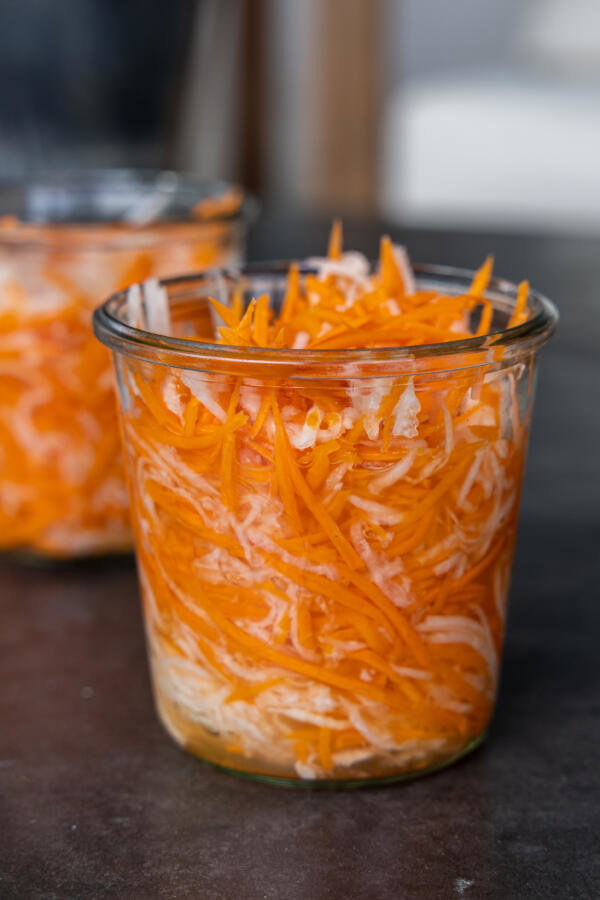
I love pickled vegetables. Fresh is always great, but if you want to do something a little extra with your veggies, I highly recommend pickling. In this quick pickled daikon radish and carrot recipe (also known as “Đồ Chua” in Vietnamese cuisine), I thinly slice these two veggies and place them in a vinegary liquid. Once the veggies sit in the pickling juice for a little while, they become refreshingly sweet, vinegary, and slightly salty. So good!
In my house, these pickled radishes and carrots shine in poke, salads, and even breakfast bowls. On busy days, you’ll see me grabbing chicken teriyaki from Trader Joe’s (in the freezer section), rice (homemade or also Trader Joe’s), then make a delicious bowl with lettuce and these pickled veggies. It’s a restaurant meal for everyone in mere minutes!
What are “daikon radishes”? Daikon radishes are large, mild white radishes common in Asian cuisine. Daikon radishes are crisp, sweet, and mild, whereas red radishes have a sharp, spicy, and peppery bite.
Pickled Daikon and Carrots Video
How to Make Pickled Daikon and Carrots
Making pickled daikon and carrots involves three simple steps: preparing the vegetables, mixing up the brine ingredients, and a little bit of waiting.
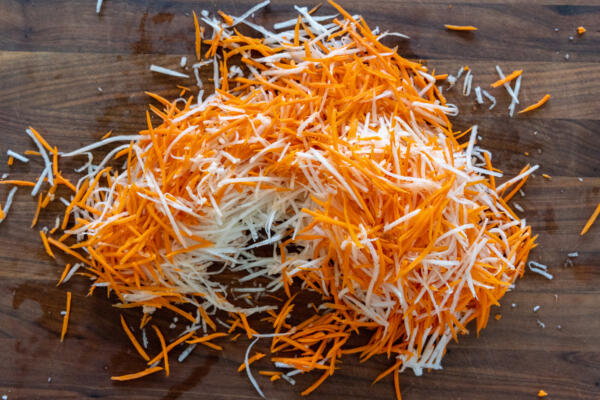
- Prepare the vegetables: Peel and cut the daikon radish and carrot into thin, uniform matchsticks. I like to use a mandoline slicer for speed and even results.
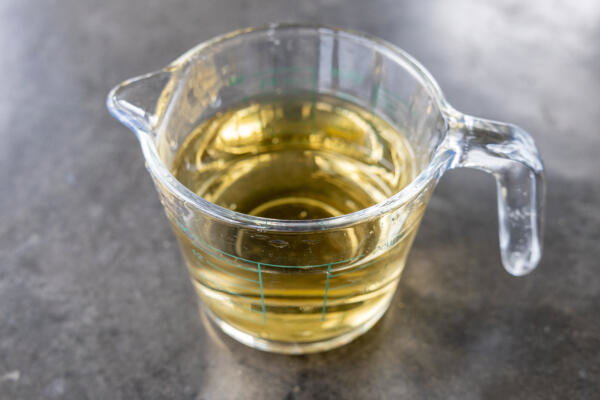
- Make the pickling brine: Combine the warm water, sugar, and salt until dissolved, then stir in the rice vinegar. The warm water dissolves the sugar without cooking the vegetables — no stovetop needed.
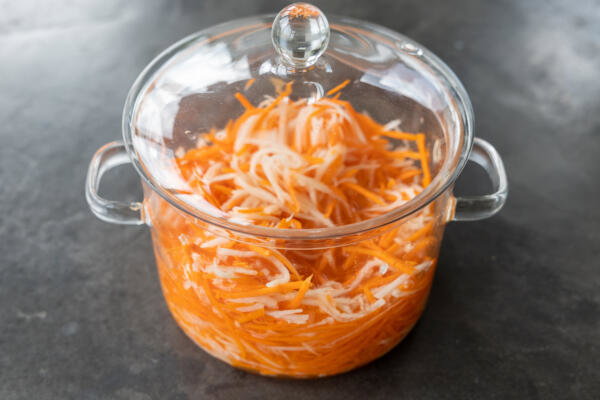
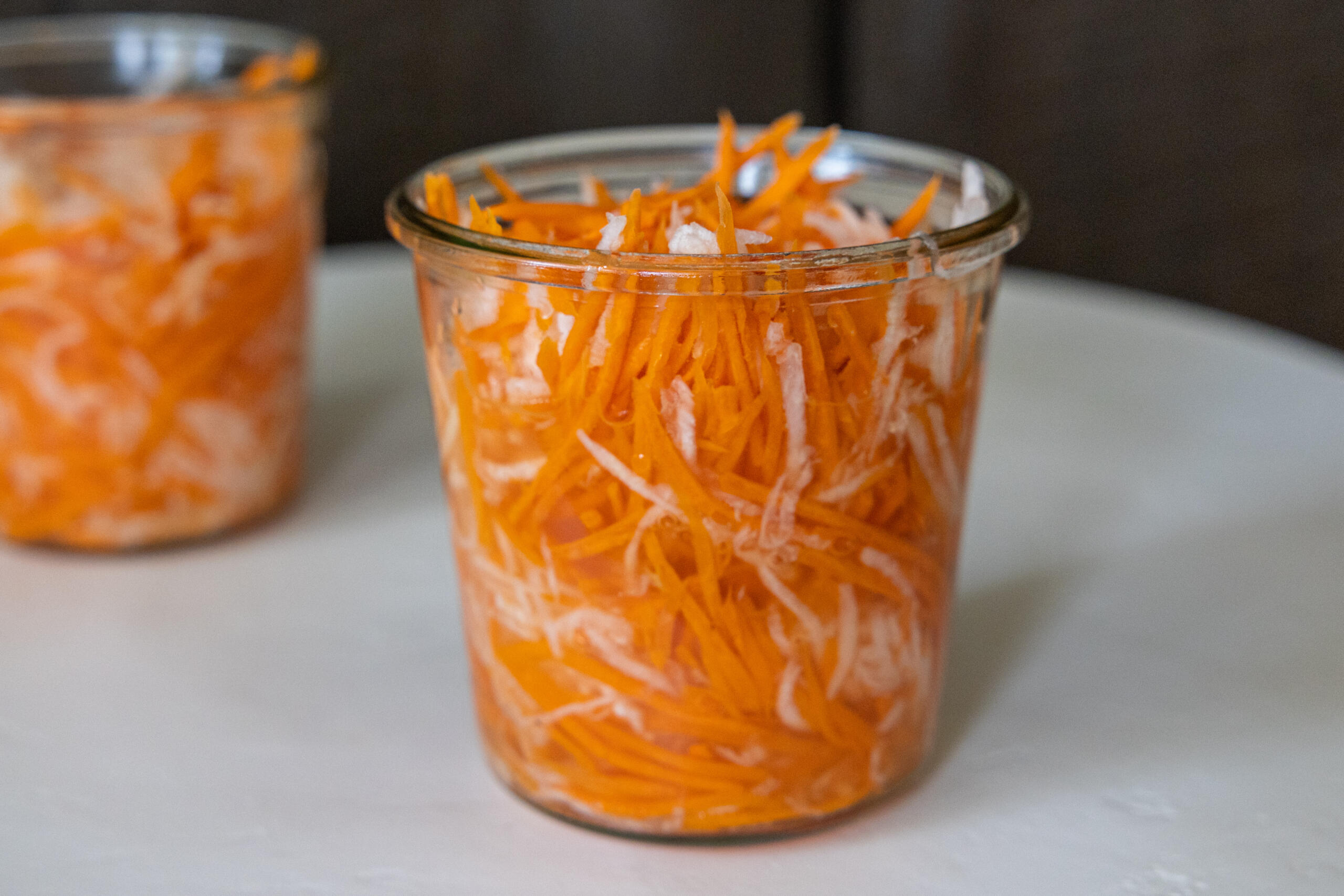
- Assemble and pickle: Toss the vegetables with the brine in a large bowl, then pack into clean glass jars. Press down to submerge fully, then close tightly with a lid. Refrigerate the pickled veggies for at least a few hours but overnight is even better.
Storing pickled carrots and radishes: Store these refrigerator pickled veggies in glass jars (with tight lids) in the fridge for up to a week. They’ll be most crunchy the first few days, and then become softer and more sour over time. It’s always best to avoid freezing pickled veggies!
Tips and Tricks for the Best Pickles
Peak crunch and perfect balance comes from following the recipe and these tips. Let’s take a quick look.
- Cut the veggies uniformly: Cut the daikon radish and carrots into thin, even matchsticks. Then, they will pickle evenly and stay crunchy. This mandolin slicer is my best friend in recipes like these!
- Salt for extra crunch (optional): Sprinkle the matchsticks with a little salt and let them sit 10–15 minutes. Rinse thoroughly and pat dry before adding the brine. This helps to draw out moisture and tame the daikon’s sulfur smell.
- Use warm, not hot, water: Warm water helps dissolve the sugar without making the vegetables too soft.
- Submerge the veggies completely: Press the vegetables down in the jar so they are fully covered by the brine. Exposed pieces soften and spoil faster.
- Adjust the balance: Taste the brine/vinegar solution before adding the vegetables. For more tang, add extra vinegar; for sweetness, a bit more sugar.
- Let the flavors develop: The pickles are ready in a few hours, but an overnight rest in the fridge melds the flavors for the best taste.
- Tame the smell: A sulfuric aroma from daikon radishes is normal. Salting, rinsing, and a fresh brine significantly cut the smell. If the smell lingers in the fridge, store the jar in a sealed container.
Hot tip: The classic ratio is equal parts daikon to carrot, but tilt it either way depending on what you have.
Variations and Substitutions
I’m always looking for ways I can tweak my recipes if I need to. Here are some easy ways to change it up a bit.
- Switch the radish: No daikon? Use white turnip, jicama, or regular red radishes (they’ll be sharper and pink).
- Use a different vinegar: Rice vinegar (or rice wine vinegar) is traditional and mild, but if you need a substitute, apple cider vinegar gives a fruity tang. Distilled white vinegar is sharper, but also a good option.
- Add heat or aromatics: Toss in sliced Thai chilis, garlic cloves, ginger coins, or black peppercorns for a flavor boost.
- Adjust the sweetness: Feel free to adjust the sugar how you like it. Swap the granulated sugar with a sweetener like monk fruit for a low-carb version
Serving Pickled Daikon and Carrots
Any time you’re craving pickled veggies is the perfect time to serve these pickled daikon radishes and carrots. Especially when it comes to the meals below. Remember to use clean utensils when removing pickles from the jar to avoid contamination and risk spoiling the pickles too quickly!
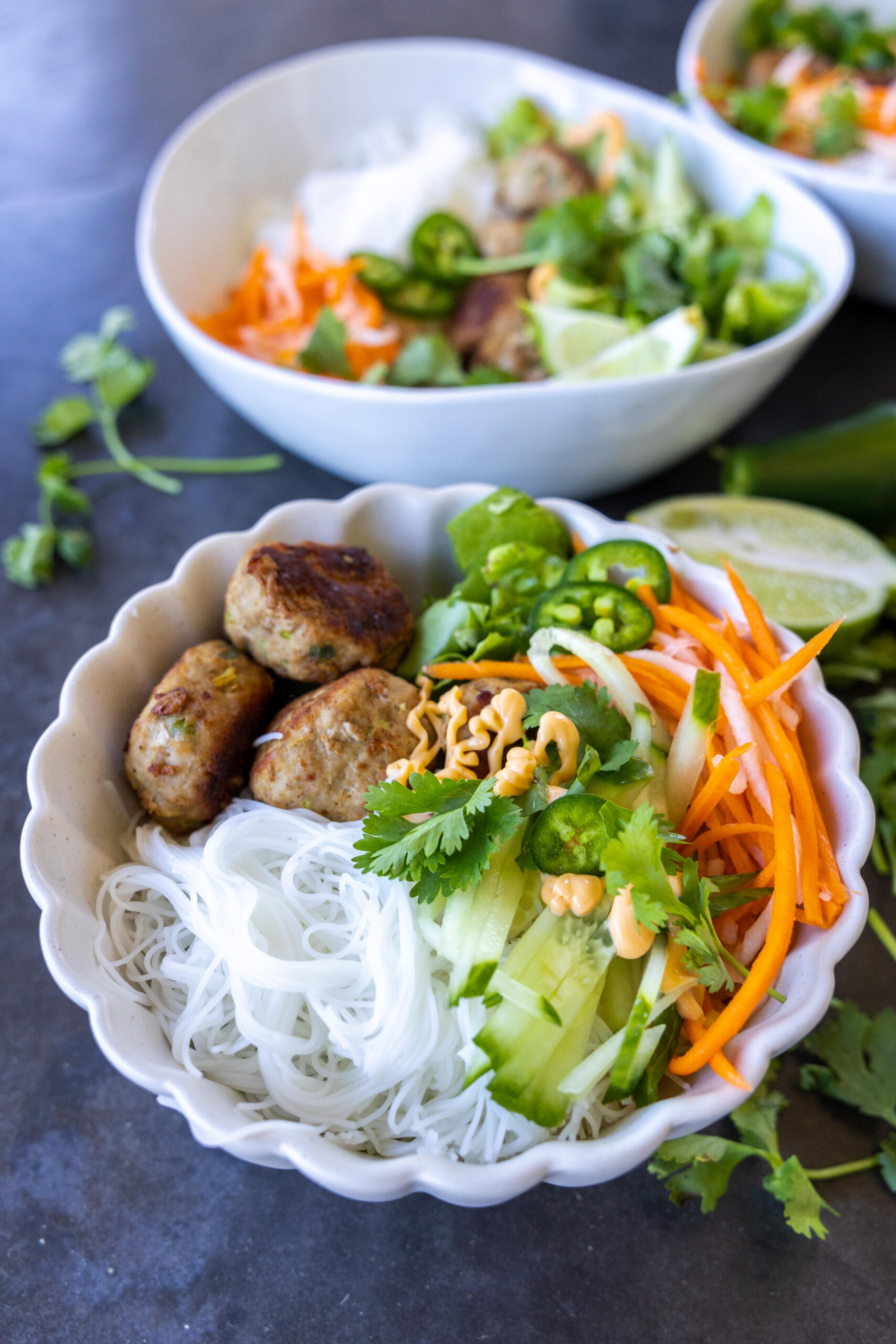
- Banh Mi Sandwiches: The classic Vietnamese sandwich — layer these pickled veggies with savory meats, pâté, and fresh herbs.
- Grilled Meats: Serve the pickled veggies alongside meat dishes like chicken or pork for a refreshing contrast.
- Spring Rolls & Lettuce Wraps: Tuck a few sticks inside for extra texture.
- Rice Plates: A side of pickles completes a rice bowl with grilled meats.
- Poke Bowls, Salads, and Tacos: They add zing to any bowl or taco night.
More Quick Pickled Vegetables
- Quick Pickled Cucumbers – Crisp cucumber slices in a tangy dill brine
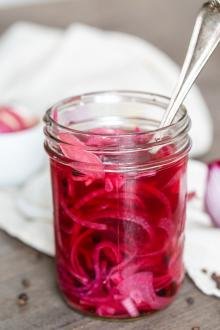
- Easy Pickled Onions Recipe – Vibrant pink onions that elevate tacos, salads, and burgers
- Quick Pickled Asparagus – Tender-crisp asparagus spears pickled with garlic and herbs
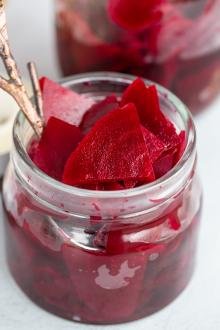
- Quick Pickled Beets – Earthy, sweet pickled beets perfect for salads or as a side
- Marinated Mini Bell Peppers – Colorful peppers in a zesty brine
Recipe
Ingredients
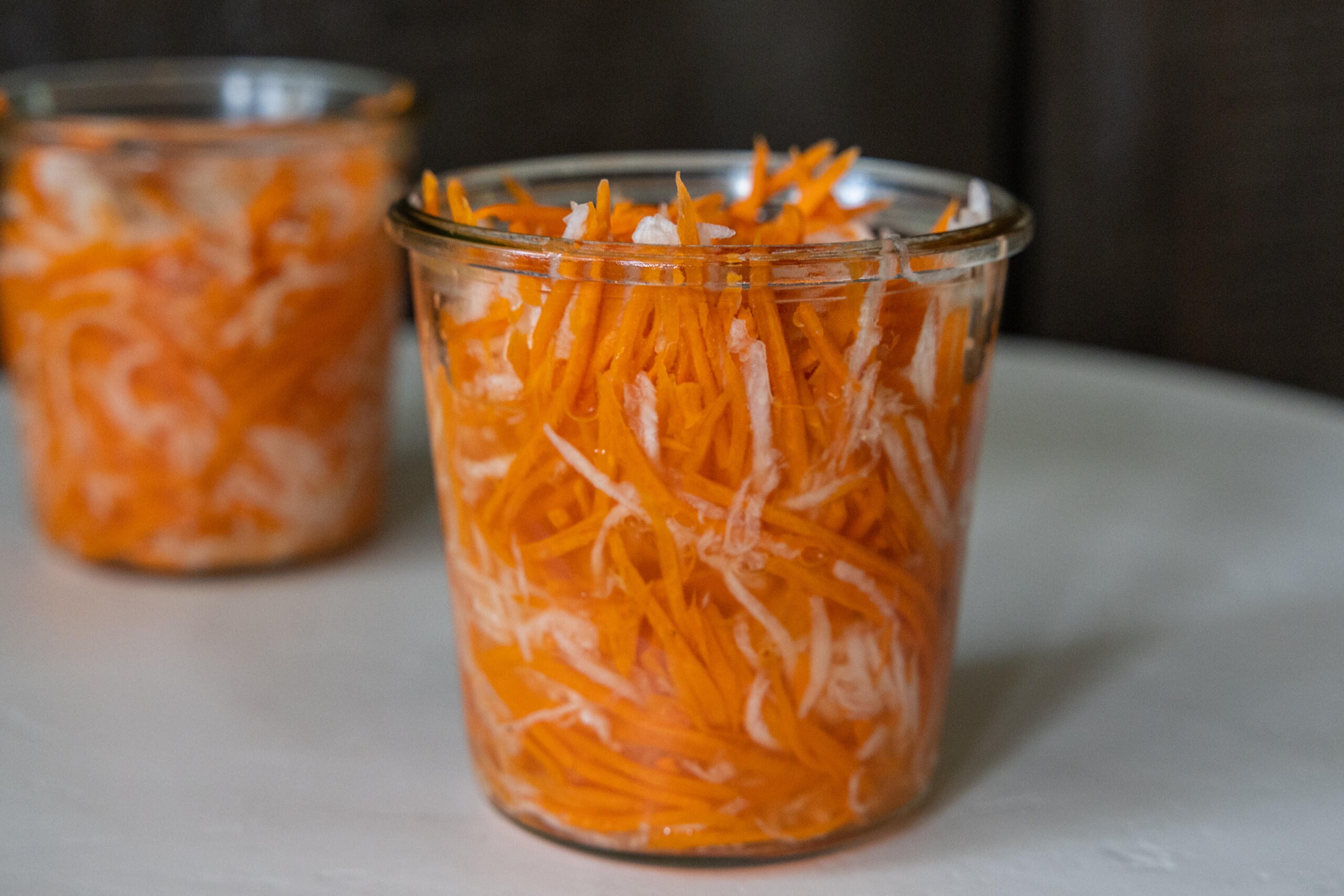
- 1 lb carrots peeled and cut into thin matchsticks
- 1 lb daikon radish peeled and cut into thin matchsticks
- 1 tsp salt
- ⅓ cup granulated sugar
- 1 cup rice vinegar or distilled white vinegar
- 1 cup warm water
Instructions
- Wash, peel, then shred or thinly slice the carrots and daikon radish. Place them in a large bowl.
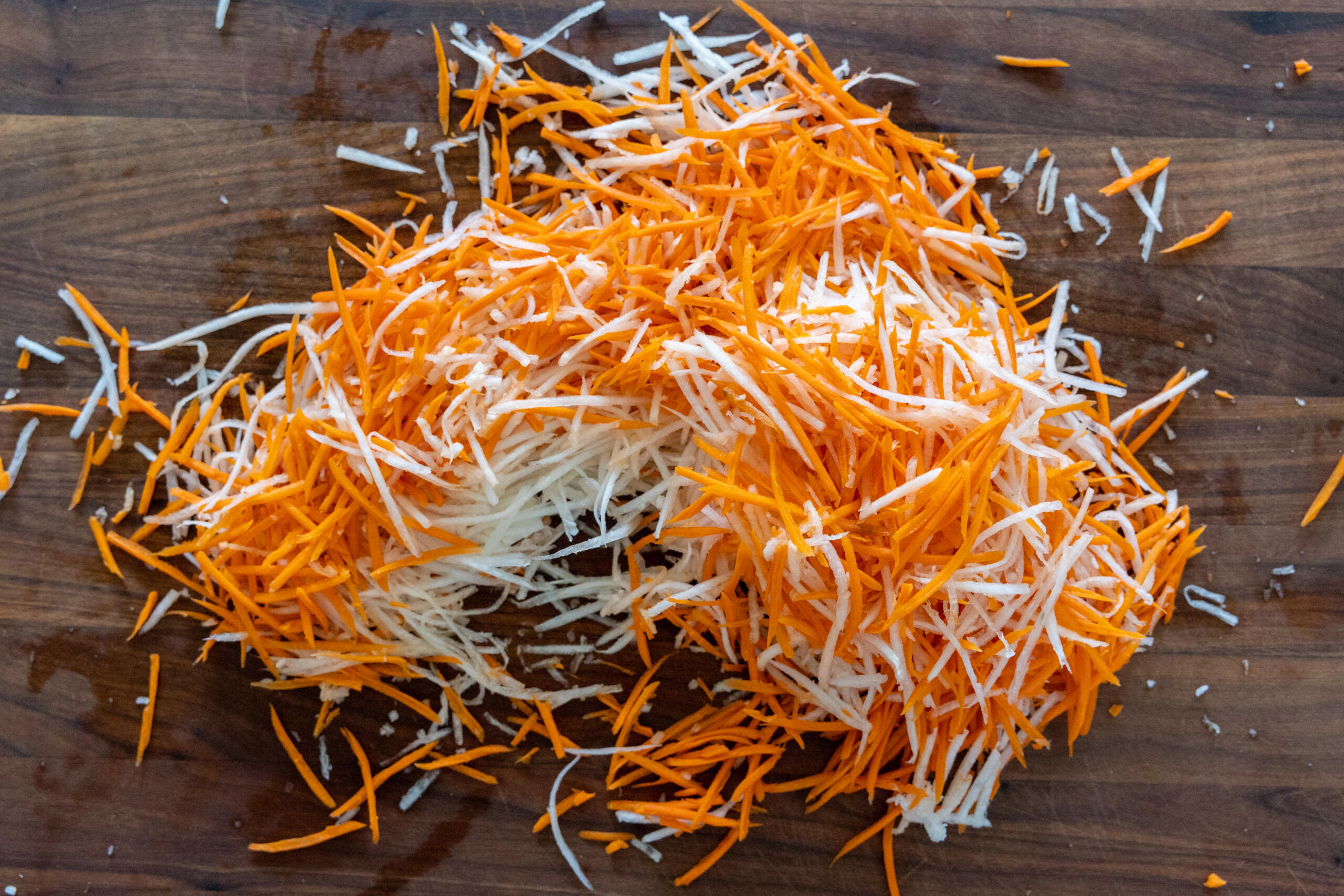
- Add the salt, sugar, vinegar, and warm water. Toss everything together until well combined.
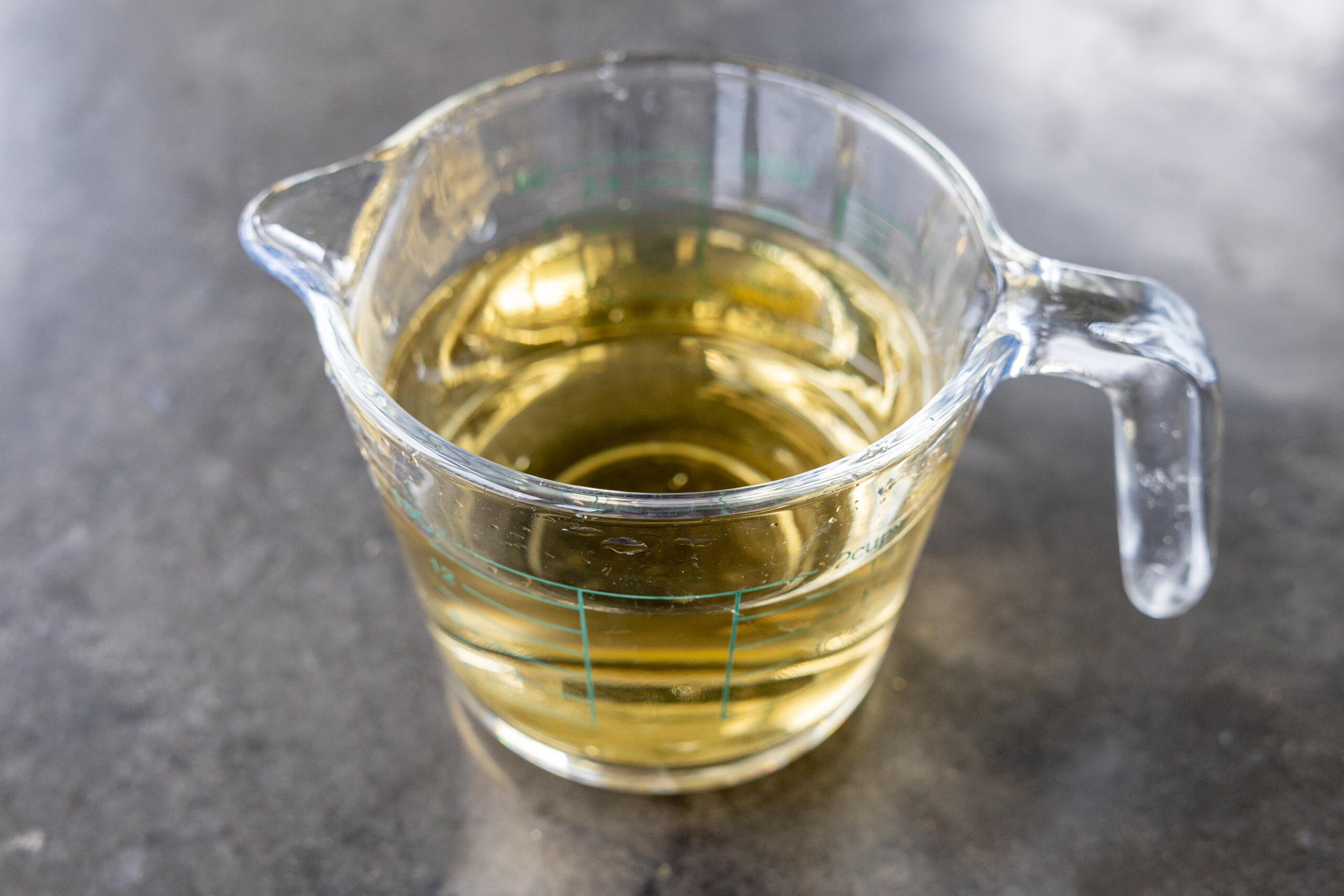
- Let the vegetables sit for a little while to soften and release some of their juices.
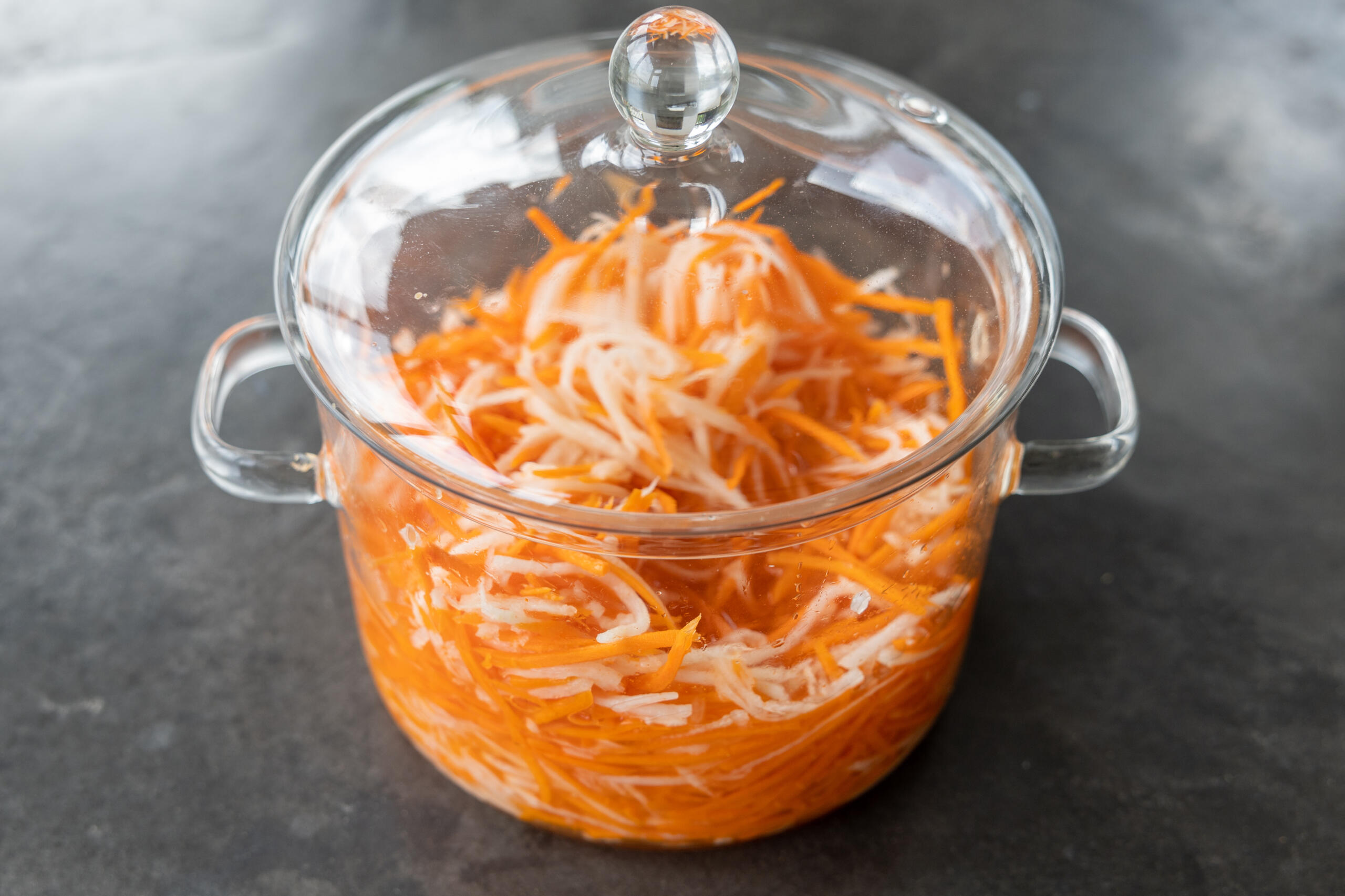
- Transfer the vegetables and pickling liquid to jars. Refrigerate for a few hours, then enjoy.
No Comments